

Grid-Connected Solar Installation Services Hobart
Our Hobart-based solar installation team delivers complete grid-connected system solutions across Sandy Bay, Mount Nelson, West Hobart, Battery Point, and surrounding Tasmania suburbs. Grid-tied solar installations provide immediate electricity bill reduction through self-consumption benefits and feed-in tariff income from surplus energy exports to TasNetworks infrastructure.
We handle comprehensive grid connection services, including system design tailored to your property’s consumption patterns, TasNetworks connection applications and approvals, council compliance coordination, and professional installation by Clean Energy Energy EnergyCouncil-accreditedd technicians. Our grid-tied installations range from standard residential systems to larger commercial configurations, with capacity options from 5kW to 10kW+ depending on available roof space and energy requirements.
Each installation includes inverter setup optimized for Tasmania’s grid requirements, bidirectional meter coordination, feed-in tariff activation, and system monitoring configuration. Our services cover all technical aspects of grid integration, ensuring compliant connection to Hobart’s electricity network while maximizing financial returns through reduced grid consumption and export credit generation throughout your system’s operational lifetime.

How Grid-Connected Solar Systems Work
Grid-connected solar systems operate through direct integration with Tasmania’s electricity network, generating power during daylight hours while maintaining continuous grid access. Your solar panels convert sunlight into electricity, powering appliances and devices in real-time, with any excess production automatically flowing back to the grid through your bidirectional meter.
This bidirectional meter tracks both electricity consumption from the grid and surplus energy exports, calculating your net energy usage for accurate billing. During peak solar production hours, your system offsets grid consumption entirely, with overflow generation earning feed-in credits that reduce future electricity costs.
The system prioritises solar-generated electricity for immediate household use before exporting to the grid, maximising self-consumption benefits. When solar production drops below consumption levels—during evenings, cloudy conditions, or winter months—your property seamlessly draws supplementary power from the grid without interruption.
Grid connection eliminates energy storage concerns, as TasNetworks’ infrastructure functions as unlimited virtual battery capacity. This configuration delivers consistent power reliability while capturing financial benefits from both reduced grid consumption and feed-in tariff payments for exported energy.
System Sizing for Different Hobart Properties
Grid-connected system sizing depends on property electricity consumption patterns, available roof space, and feed-in optimisation goals. Standard Hobart residential installations range from 5kW to 10kW capacity, with 6.6kW systems representing the most common configuration for typical 3-4 bedroom homes consuming 15-25kWh daily.
Common System Sizes:
- 5kW Systems: Smaller properties, lower consumption (10-15kWh daily), limited roof space
- 6.6kW Systems: Standard homes, average consumption (15-25kWh daily), balanced production
- 8-10kW Systems: Larger properties, higher consumption (25-40kWh daily), maximum feed-in generation
System capacity directly influences both self-consumption benefits and feed-in tariff income. Oversized systems generate substantial surplus energy for grid export, maximising feed-in credits but requiring higher upfront investment. Appropriately sized systems balance installation costs against consumption offset and export income potential.
Hobart’s solar radiation levels support year-round production, with summer months delivering 25-30kWh daily from 6.6kW systems and winter production maintaining 10-15kWh daily output. Our assessment process analyses your electricity bills, consumption timing patterns, and roof orientation to determine optimal system capacity for maximum financial returns.

Grid-Tied Systems vs Battery Storage Options
Grid-connected systems without battery storage deliver lower upfront investment costs while maintaining reliable power access through grid connection. This configuration suits Hobart properties, prioritising immediate return on investment and straightforward system operation without battery maintenance considerations.
The grid effectively functions as unlimited energy storage, accepting surplus solar production during generation periods and supplying electricity during non-solar hours. This eliminates battery replacement costs and associated maintenance requirements, simplifying long-term system ownership and reducing total lifecycle expenses.
Battery-free grid-tied installations qualify for faster payback periods compared to battery-inclusive systems, with reduced complexity and ongoing maintenance obligations. Grid connection dependency means power outages affect grid-tied systems despite active solar production, as safety protocols prevent islanding during network faults. Properties requiring backup power capabilities during outages benefit from hybrid systems combining grid connection with battery storage.
Our consultation process reviews your power reliability priorities, budget parameters, and energy independence goals to recommend optimal grid-tied or hybrid configurations for your specific circumstances.
System Monitoring and Performance Tracking
Grid-connected solar systems include monitoring capabilities that track real-time energy production, grid export volumes, and self-consumption rates through smartphone apps or web portals. These monitoring platforms display daily, monthly, and annual generation data, allowing comparison against expected performance levels based on your system’s capacity and Hobart’s seasonal solar radiation patterns.
Performance tracking identifies production anomalies indicating potential panel soiling, shading issues, or inverter faults requiring attention. Early detection of performance degradation prevents extended periods of reduced generation, protecting your investment returns and feed-in tariff income. Monitoring systems typically alert installers automatically when production drops below expected thresholds for proactive maintenance scheduling.
Consumption monitoring features available on advanced inverters show household electricity usage patterns, helping identify opportunities for load shifting to solar production hours. This optimisation increases self-consumption rates, reducing grid dependence while maximising bill reduction benefits. Our installation includes a complete monitoring setup with performance baseline establishment and ongoing remote monitoring support for system health verification.
Professional Installation Process
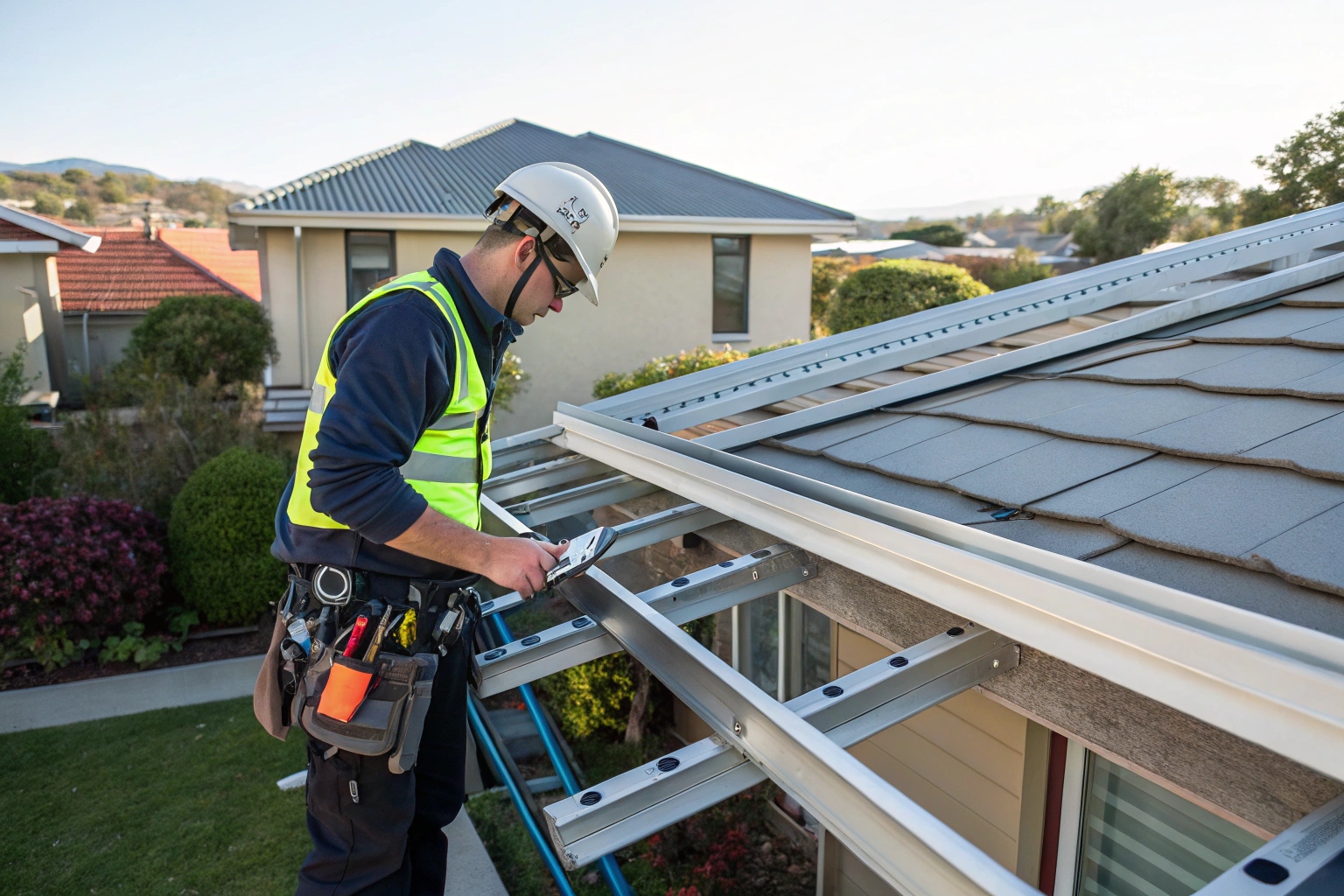
Our Hobart solar installation process begins with a comprehensive property assessment, evaluating roof condition, orientation, shading analysis, and electrical infrastructure capacity. This site evaluation identifies optimal panel placement for maximum production while confirming structural suitability for mounting systems across Hobart’s varied roof types. System design incorporates your electricity consumption patterns, budget parameters, and aesthetic preferences, with detailed production modelling specific to your property’s location and roof characteristics.
Installation work includes secure mounting rail installation, panel positioning and connection, inverter setup, and electrical integration with your property’s distribution board. Our Clean Energy Energy Council-accredited installers complete all work to standards, with comprehensive testing verifying system performance before commissioning.
Post-installation support includes monitoring system setup, feed-in tariff activation confirmation, and operational training covering system monitoring, maintenance requirements, and performance optimisation throughout your system’s operational lifetime.


Frequently Asked Questions
System sizing depends on your daily electricity consumption and roof space availability. A 6.6kW system suits most Hobart homes consuming 15-25kWh daily, generating sufficient energy for self-consumption plus feed-in exports. Our assessment reviews your electricity bills to recommend optimal capacity.
Standard grid-tied systems shut down during outages for safety reasons, preventing backfeed into the network during maintenance. Hybrid systems with battery backup maintain power during outages while retaining grid connection benefits.
Connection applications typically process within 10-15 business days, with our team managing all submission requirements and follow-up coordination to minimize delays.
Grid-tied systems require minimal maintenance, primarily periodic panel cleaning and annual inverter performance checks. Most components carry 10-25 year warranties, with monitoring systems alerting to performance issues.
Yes, most grid-tied systems support battery retrofitting, though initial inverter selection affects compatibility. We design systems with future battery integration capability when requested.
Feed-in tariff rates transfer with your electricity account, though rates may change with new retailers. We recommend reviewing feed-in offers when switching providers to maximize export income.
Get Your Grid-Connected Solar System Installed
Our Hobart solar installation team provides complete grid-tied system design, TasNetworks approval management, and professional installation across Sandy Bay, Mount Nelson, West Hobart, and Battery Point. We handle all connection compliance requirements, council approvals, and feed-in tariff activation for seamless system commissioning.
Contact our team for property-specific system sizing recommendations, production modelling based on your roof configuration, and transparent pricing covering all installation components. Our consultation process reviews your electricity consumption patterns and budget parameters to design optimal grid-connected solutions delivering maximum bill reduction and feed-in benefits across Tasmania’s electricity network.
